polis: a collective blog about cities worldwide
min li chan

To Replenish a Sense of Wonder

by Min Li Chan

In a radio interview with Eleanor Wachtel of Writers & Company, Gail Jones reflects upon urban experience and its centrality to her novel Five Bells. The conversation is insightful and eminently quotable, with many passages that threw new light on my old urbanist ways. Jones urges us to be aware not only of a city's physicality, but also of its intangible atmospheres:
I'm very interested in psychogeography, and the idea that we must walk around our own place with an active intelligence and a degree of radical attention to what is there. ... We ought not be the flaneur who is idly and languidly consuming the sights of the city, we must look at its shapes, at its motions, attend to its sounds, corridors between spaces, the unexpected things looming up or falling away as we turn a corner.

Simplifying New York Parking Signs

by Min Li Chan

In part five of our series on urban typography, we turn our attention to the universal problem of complicated parking signs. With their convoluted restrictions and temporal conditions meted out in uppercase authority, they almost seem designed to guarantee a constant stream of revenue from parking tickets.

New York's transportation commissioner Janette Sadik-Khan recently observed that the city's parking signs "can sometimes be a five-foot-high totem pole of confusing information."


Source: Park It! Guides

The design firm Pentagram recently worked with New York's transportation department to redesign the city's parking signs. The new versions are left-aligned for readability, consistently color-coded and clearly spaced. They are also streamlined to two flavors: one for commercial vehicles, one for all other vehicles. A logical and consistent information hierarchy conveys the most important parts first, matching the cognitive flow of a motorist trying to determine whether she is parked legally.


Source: Pentagram

Each sign begins with the type of parking available, followed by important notices and the period of enforcement. The previous signs counterintuitively displayed the time before the day of the week. By comparison, the simplified signs are a breath of fresh air.

Polis readers, if you have examples of what delights or frustrates you about parking signs in your city, we'd love to hear about them!

+ share

Ending Assault on Women in Delhi and Beyond

by Min Li Chan


Source: The Atlantic

Women and men throughout India have been taking to the streets to express outrage at the savage gang rape and torture of a 23-year-old woman in New Delhi on Dec. 16, which precipitated her death before the year's end.

This case has sparked public debate on confronting a history of sexual harassment and violence that plagues many Indian cities. As reported in the New York Times: "'That girl could have been any one of us,' said Sangeetha Saini, 44, who took her two teenage daughters to a candle-filled demonstration on Sunday in Delhi. Women in India 'face harassment in public spaces, streets, on buses,' she said."

The demonstrations in India open questions that resonate worldwide. Jasmeen Patheja sums up the challenges for cities:
Our cities will be safer when we acknowledge women as citizens. We must ask, 'Whose city?' Can we imagine a city of women? A city for women? We need to start looking at/designing/building the city as a place of women instead of focusing on protecting women — without perpetuating victimhood...
We, as women, are brought up around warnings: be careful; don't attract attention to yourself. We are taught to have a fear-based relationship with our city. Public places are not for leisure and pleasure. In my ideal city I want to be in a park and take a nap without feeling threatened. Sometimes we just love to sit, stand, walk and talk without looking available. What makes a group of boys play football on a field and not girls?
Patheja's questions evoke the shared experiences of women in many cities. In my hometown of Kuala Lumpur, malls have begun to designate "ladies only" safe zones in their sprawling underground parking garages, locating them close to entry and exit points for quick access. Local radio stations run public service announcements from time to time urging women to be alert and stay safe. In some cities, these urban design interventions are hardly new efforts — women-only subway cars were introduced in Tokyo nearly a decade ago to counter rising incidents of groping.

Sonia Faleiro contends that law enforcement agencies need vast improvement, especially since rape victims are often subjected to public shame:
Change is possible, but the police must document reports of rape and sexual assault, and investigations and court cases have to be fast-tracked and not left to linger for years. Of the more than 600 rape cases reported in Delhi in 2012, only one led to a conviction. If victims believe they will receive justice, they will be more willing to speak up. If potential rapists fear the consequences of their actions, they will not pluck women off the streets with impunity.
In response to the protests, India's Home Minister has pledged to "increase the number of buses at night, track those buses with GPS devices, ensure drivers carry identity badges and increase the number of police officers on busy routes."

Government intervention, redesign of public space and services, and effective law enforcement are certainly needed. But are they sufficient? Mitra Kalita links the assailment of women to the limitations of top-down intervention: "How will the government stop all that inappropriate touch that happens on its city buses every day? Or those hands that enter the sides of a rickshaw to just feel around? Or all those whistles and catcalls?"

As one protest placard from the Delhi protests reads, "We live in a society that teaches women not to get raped, instead of teaching men not to rape."

Fully addressing this problem may require a widespread change in consciousness. How does local culture — as honed at the grassroots level within families and communities — instill respect for women? How does the education system support this value? How does the powerful language of popular media, transcending barriers of literacy, portray women and promote gender equality? In our best efforts, women cannot be treated merely as concepts — we are mothers, grandmothers, cousins, sisters, daughters, friends and neighbors.

In many ways, India's public discourse following the tragedy is a moving testament to civil society and a breathtaking expression of the world's largest democracy at work. Let's hope it doesn't stop there.

+ share

A Scopitone, New York and Two Frenchmen

by Min Li Chan


In the foreword to his 1929 book, "The City of To-Morrow and its Planning," architect Le Corbusier recalls a conversation with the editor of New York Magazine, in which the latter declared: "In two hundred years Americans will be coming over to Europe to admire the logical productions of modern France, while the French will be standing in astonishment before the romantic sky-scrapers of New York."

Thirty-five years later, singer-songwriter Serge Gainsbourg appears to reinforce this notion in a 16mm jukebox film, or Scopitone (a fascinating, now-obsolete format predating the contemporary music video). In the song "New York USA," Gainsbourg is perhaps not as much standing in astonishment at the towers before him than hanging nonchalantly on ledges, musing oratorically at dizzying heights.

Le Corbusier was a prolific theorist and champion of the vertical ascension of cities, believing that it would liberate residents from congestion and squalor on the ground. As Gainsbourg invokes the names of then-iconic skyscrapers, one can't help but imagine the architect's delight at this vision of a radiant modern city lifting its inhabitants skyward, even if he purportedly called New York a beautiful catastrophe.

+ share

Richardson Apartments: A Fresh Take on Affordable Housing

by Min Li Chan

Nested within San Francisco's affluent Hayes Valley neighborhood, Richardson Apartments is an unconventional affordable housing initiative for the recently homeless. Riding the bus home last weekend, I caught a glimpse of the building's impressive facade a few intersections away, hopped off the bus and ventured closer to take a look.

Ecology of Images

by Min Li Chan


Seoul at night. Source: Min Li Chan

In describing the triumphs and travails of cities and urban culture, we often turn to photography. This is even more so with the democratization of technology, replete with smartphone snapshots, Internet-uploaded timelapse photography and easily accessible satellite imagery. Film critic A.O. Scott, in "Around the World in 99 Minutes and Zero Words," writes:
Susan Sontag concluded her book 'On Photography' with a plea for 'an ecology of images,' an approach to making and reproducing photographs that would protect both the meaning of particular pictures and the integrity of the reality they depict. Since the 1970s, when the essays in Sontag’s book were written, the global glut of images has grown almost beyond measure. In the age of Instagram and Google Earth it is easy to believe — it is sometimes hard not to believe — that every inch of the planet, every human face and patch of wilderness, has been snapped up and uploaded. We have seen it all.
In the constant change of hypergrowth cities on a planet of six billion inhabitants and growing, we clearly haven't seen it all just yet.

+ share

A View from the Bus Yard

by Min Li Chan


"The Yard," a strangely captivating photo-essay by Marcin Wichary, offers a behind-the-scenes (and at times behind-the-wheel) glimpse of San Francisco's MUNI bus yard. As we commute each day — absorbed with mobile phones, thoughts racing toward the day ahead — most of us are oblivious to the operational details that Wichary's tour brings into focus.


On the front-end: the complexity of the driver's console, the choreography of bus routes, the sensors that detect when the bus doors open, the unified network of contactless transit payment cards, not to mention the bike racks, wheelchair-access capabilities and recordings that announce the next stop — just to name a few parts of an intricate system that helps us reach our destinations. On the back-end: the  continuous coordination of repairs, maintenance work and protocols to make the buses not only functional, but as environmentally friendly as possible. I was struck by the intensely physical and intricately mechanical nature of the bus system — its wheels, brakepads, switches, knobs and levers.


Are urban buses heading toward a new future of touchscreen displays and levitating superconductor fluidity? Or are they constrained by their compact routes, requiring frequent stops and short bursts, never allowing for the elegant lines of the high-speed train?
Credits: Photos by Marcin Wichary.

+ share

D.I.Y. Advertisement in Oakland

by Min Li Chan

If you peer over the wall as you exit the BART train car at the West Oakland elevated station in Oakland, Calif., you'd notice a homemade ad for car donations pasted on the roof of a neighborhood restaurant.


For me, this brief visual encounter spawned a series of reactions. First, I was amused by chancing upon an ad placed so unconventionally but opportunistically within the commuter's line of sight. I was also struck by its rough, handmade simplicity in contrast with the polish of corporate billboards. Finally, I was interested in the idea that every urban surface could be monetized by an enterprising citizen. For those inclined toward the Paulistano school of eschewing billboards entirely, the latter is surely terrifying.

Nonetheless, if one were to extend the metaphor of a city to the virtual world — each website as building or urban structure, homepage as front door, users as communities — it seems that we are more forgiving of virtual billboards in our online space than physical billboards in the cities we inhabit. In fact, there is probably something compelling about the notion that any individual or small mom-and-pop business can put up virtual storefronts and place the same online billboards as corporations do. Should we actively equip them to do the same in the physical world?

Then, the aesthetic argument: If the majority of billboards possessed the hallmarks of craft, thought and effort, we might be less inclined to dismiss them as sources of visual pollution.

+ share

Edward Glaeser on Urban Renewal in Shrinking Cities


Source: Min Li Chan

“The hallmark of declining cities is that they have too much housing and infrastructure relative to the strength of their economies. With all that supply of structure and so little demand, it makes no sense to use public money to build more supply. The folly of building-centric urban renewal reminds us that cities aren’t structures; cities are people ...

“Ultimately, the job of urban government isn’t to fund buildings or rail lines that can’t possibly cover their costs, but to care for the city’s citizens. A mayor who can better educate a city’s children so that they can find opportunity on the other side of the globe is succeeding, even if his city is getting smaller.”

— Edward Glaeser in “Triumph of the City,” 2010

This is part of the Polis collection of quotes related to cities.

+ share

Satellite Views of Urban Inequality

by Min Li Chan

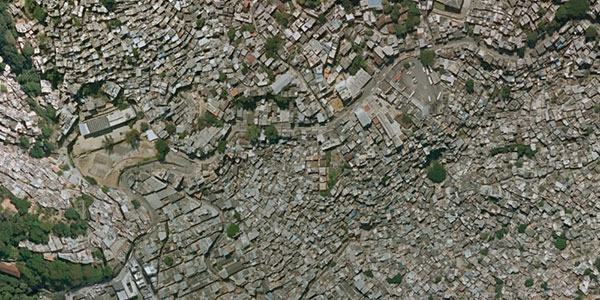
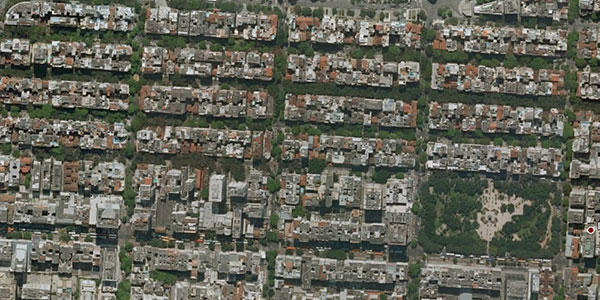
Tim De Chant, in his blog Per Square Mile, considers income inequality from space by contrasting Google Earth images of adjacent neighborhoods of different income levels. The results are striking and provocative. In one instance, affluence evokes order over chaos:


Rochinha, Rio de Janeiro


Zona Sul, Rio de Janeiro

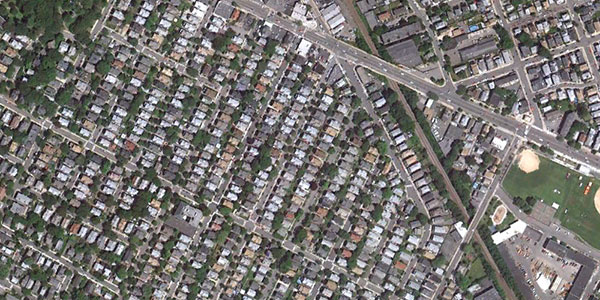
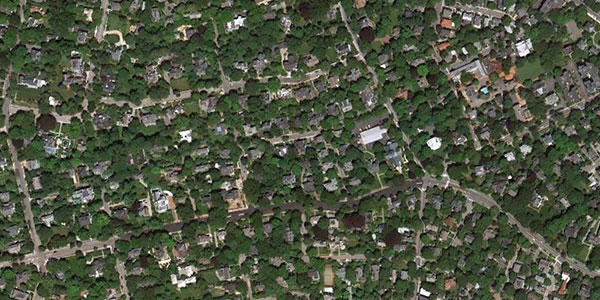
In another case, affluence seems to liberate residents from the grid, to carve out living spaces more organically:


Ball Square, Somerville, Boston Metro Area


West Cambridge, Boston Metro Area


De Chant observes that in all his examples, and those curated from his readers, the prevalence of urban trees signaled greater wealth in the area. Taking the ten thousand foot view, one can posit urban trees as the impact of local tax dollars manifested, bringing to mind the political and commercial mobilization of power that more affluent communities wield.

As I peered through a plane window over the outskirts of Las Vegas last week, I wondered what the bird's eye view pictured above might foreshadow.


Source: Min Li Chan


Credits: All images from Google Earth via Per Square Mile unless otherwise noted in the captions.

+ share

Culture in Universal Street Signs

by Min Li Chan

The next time you stop in front of a red light at a bustling intersection, consider the remarkable state of traffic signs. Ubiquitous across cities around the world, they provide a shared experience that transcends language and culture.

If I know when a right turn is prohibited or when a full stop is mandatory while scooting around London, I'd recognize similar directions amidst the egalitarian morass of car, rickshaw, scooter and pedestrians in central Hanoi.


Source: Min Li Chan

Some cities have found ways to express local culture in the universal language of traffic signs, such as the crosswalk in Oakland's Chinatown (above) and the famous Ampelmännchen in the former East Berlin (below).


Source: icadrews

In addition to the universal language of traffic symbols, local interpretations of the rules they enforce lead to entirely different traffic dynamics. How each culture bends the rules or adheres to them partly defines the thin line between collision and collaboration among the strata of motorized and ambulatory populations.

+ share

Malaysia’s Bersih 3.0: Protest in the Age of Social Media

by Min Li Chan


Bersih 3.0 rally in Kuala Lumpur. Source: Kevin Loh on Facebook

Thousands of Malaysians took to the streets last weekend, calling for electoral reforms at Bersih 3.0 rallies in Kuala Lumpur and other cities throughout the country. The movement's moniker plays on the word bersih, which means "clean" in Malay. Its yellow T-shirts are an appropriation of the color that represents the country's monarchs, within a political system modeled on parliamentary democracy.

This year's rallies mark the third wave of a series that emerged in 2007. Protesters are demanding fairness and transparency in the upcoming elections. These rallies have been repeatedly denied legal sanction, to much controversy, and have been dispersed by riot police with water cannons and tear gas.


For many young Malaysians, participation in persistant rallies of this magnitude is unprecedented. Within the global consciousness, Bersih 3.0 takes place amidst an upswell of memes around dissent and civil society, drawing comparisons to the Arab Spring and remixes of the Occupy theme.

Equally striking, particularly for Malaysians living abroad, is the brave new world of connected cloud protest: the solidarity of watching Facebook profile photos turning yellow over the weekend, the continuous live feed of status updates, photos and videos, and a global platform through which to organize peaceful, nearly simultaneous rallies across 85 cities where Malaysian communities reside.


Bersih 3.0 rally in New York City. Source: Global Bersih 3.0 on Facebook

Use of the internet and related technologies — the web, social media, broadband telephony — in grassroots movements allows us to redefine the age-old aphorism of strength in numbers. Most importantly, it empowers us to be engaged citizens, even when far from home. Still, many argue that "soft protest" is a pallid facsimile of the commitment required on the ground, along with its potential risks. Perhaps the digital pen can be as mighty as the proverbial sword, even as political bloggers around the world are banned from returning to their home countries and websites are blocked in attempts at suppression.

+ share

Typography in the City: Public Service and Pizzazz

by Min Li Chan


New York is a city of opinionated typography — clear, bold and with a point of view. Amidst the vibrant urban cacophony, a keen eye scanning the skyline and baseline will inevitably land upon a feast of serifs or absence thereof, ascenders and descenders, leading and kerning.


A designer friend living in Brooklyn once mused that the flourishing of typography in New York is a function of the city's density of creative cohort, enticed by the possibility of communicative surfaces.


Typography in the city is branding at its most commercial, as well as wayfinding for the public good. It is most effective when cognizant of sightlines, legibility and relations with its surroundings.


How should visual access and intersecting sightlines affect typographic decisions? How does a designer find balance between artistry and legibility? Should the typography blend into its surroundings or should it stand out?


Polis readers, if you have examples of urban typography you'd like to share, we'd love to hear about (and see) them!


Credits: Photos by Min Li Chan.

+ share

May I Have a Seat, Please?

by Min Li Chan

Wandering the streets of Hong Kong, you'd be hard-pressed to find public seating on the sidewalks, especially when you're meant to be going somewhere or doing something in this vibrant, relentless city. On weekends, communities of domestic helpers create their own makeshift Sunday seats — a transient sprawl of living rooms, if you will — on the floors of plazas. These are demarcated by cardboard boxes for walls, picnic cloths and household paraphernalia.


When I set out to The Creators Project in San Francisco this weekend, my mind couldn't help but hop across the Pacific to the memory of my fatigued muscles, aching for a sanctioned surface to sit on in Hong Kong. Just outside the venue at Fort Mason, a complex of renovated military buildings, seats were not only in abundance, but also part of an oeuvre of public art in the form of functional urban sculptures: If you were tired from meandering through the weekend's extraordinary exhibition of technology and art, you could settle into a seat nearby.

One appeared to levitate.


Source: Min Li Chan

Another embodied the struggle to rise up from detritus and scale a wall.


Source: Min Li Chan

Sitting, as a physical act that is at once mobile and stationary, has had a fascinating place in the history of cities: from Rosa Parks refusing to give up her seat on the bus, to petitions for the right to sit on sidewalks. Today, urban environments almost demand shared public spaces and public seating — where there is bustle, it seems inhuman to deny the possibility of taking a moment's pause. San Francisco's recent "Pavements to Parks" initiative transforms wide, unused zones of streets and public rights-of-way (which make up 25 percent of the city's land area) into mini-parks, or "parklets." As San Francisco Great Streets Project reports:
Parklets offer a unique opportunity to widen a sidewalk, providing public space for people to sit and relax. Parklets do this by building out a platform into two or three parking spots so that the grade of the sidewalk gets carried out into the parking lane. On the platform, some combination of benches, planters, landscaping, bike parking and tables and chairs (in certain locations) all come together to provide a welcoming new public space.

Source: Inhabitat

Parklets with seating could be a welcome addition to streets in Hong Kong and other cities, creating restful, social and entertaining public space for residents and visitors alike.

+ share

Civic Commons: Frank Lloyd Wright and a Jail

by Min Li Chan

The Marin County Civic Center in the city of San Rafael, Calif., is a striking sight. At once stunning and curious, it was the hyper-modern backdrop to the 1997 sci-fi film Gattaca. For the architecture enthusiast, this National Historic Landmark and UNESCO Heritage List nominee is most recognizably the work of American architect Frank Lloyd Wright near the end of his career. Just as much of Wright's work aspires to harmonize the man-made with its environs, this brilliant, gold structure was designed to "melt into [California's] sunburnt hills." Even as Wright's rare take on a government building embraces the lush hillside, the Civic Center ultimately breaks from the hilltop in a golden, sky-piercing spire and pillars, as well as horizontal lines festooned with geometric shapes.


For the visitor who stumbles upon the immediate neighborhood of the Marin County Civic Center on a Sunday morning, its buildings and spaces, taken together, unexpectedly represent both the joys and challenges of an operating society. At its heart is the Civic Center, administrative seat of the local government. Nearby there is a hall for arts and performance events, as well as a farmer's market brimming with fresh local produce and gourmet food for a largely affluent population, along with informal opportunities for concerned individuals and activists to talk to passersby about a range of issues.


Then, visible just beyond the grounds of the farmer's market and recessed into a hill: the Marin County Jail.


Source: AECOM

According to the firm AECOM, its design of the Marin County Jail seems to take on some of the principles of Wright's Civic Center:
The project adjoins Marin County’s hall of justice and Civic Center, a national landmark designed by Frank Lloyd Wright. To preserve the character of Wright’s architecture, the facility is recessed into the hillside. The facility consists of 222 medium-security, direct supervision cells arranged in six pods, or clusters. Unique design features include the use of gray water for flushing and landscaping, and the elimination of cell windows. All natural light is provided by skylights and clear lights in the cells. Pod configurations include three general population male pods of 41 cells each, one general population female pod of 35 cells, one pod of 14 protective custody and 14 administration segregation cells, and one medical/mental health pod of 36 cells.
This convergence — of the governing and the governed; the free and the incarcerated; the legislative, judicial and market-driven — brings into relief the vicissitudes of civic life. It reminds the observant visitor not to forget those living at the periphery of our daily lives. Perhaps this setup hearkens back to a time when most cities were much smaller and more observable — a time in which we may have been more aware of the interplay between the state, markets and civil society.

Credits: Photos by Min Li Chan unless otherwise noted in the captions.

+ share

Unscripted Urban Street Life in Phnom Penh

by Min Li Chan

City life, though chaotic, is often one replete with rules — whether explicit laws or implicit norms about where to walk, how to drive, and where to engage in commercial activities or recreational pastimes. In many parts of the world, these rules are merely suggestions that can be rejected, embraced, reformulated or negotiated. A day-long ramble through the city of Phnom Penh offers up a plethora of such unscripted scenes:


Two locals manage a makeshift, single-cylinder gas stop by a busy corner, awaiting the patronage of motorbikes and auto-rickshaws.


At a bustling intersection, a flurry of activity surrounds a transient roadside purveyor of durian fruits, marked by a few plastic stools, baskets and cardboard mats. An electrician conducts repairs overhead.


Cutting across a steady stream of cars and auto-rickshaws at a roundabout, a local tradesman slowly balances a bicycle with the day's wares.


Tucked away in a quiet residential neighborhood, men sit engrossed around an afternoon chess game under the shade of a large umbrella.


The setting sun by the city square marks the start of an outdoor public aerobics class, as a few enthusiastic young aerobics instructors pump up the volume on portable stereos.

Life in hypergrowth cities often does not follow a routine prescribed by the rules that local governments enact. These unscripted urban scenes remind us of the fallacy of waxing lyrical about the "intention" or "design thinking" behind urban projects, with no mention of how those urban solutions are ultimately used by the people for whom they were designed.

+ share

Oscar Moment: A City in Dance

by Min Li Chan


In riveting scenes from Wim Wenders's 2012 Oscar-nominated 3-D dance film, "Pina," dancers for the Tanztheater Wuppertal Pina Bausch move to the themes of love, humor and longing. They are transported from the stage and into the midst of city life in the German city of Wuppertal. On the street median, underneath the tracks, in the park, or in the industrial outskirts of the city, the drama of life is expressed in the language of dance. These city scenes provide a stunning, often unlikely backdrop for dance theatrics, perhaps paying homage to the city that this illustrious dance company and its iconic choreographer call home.


"Pina" highlights Wuppertal's unconventional mix of land use. Many scenes are set in lush greenery — no surprise, given that green space occupies two-thirds of the municipal area. The city is known for its woods, parks and slopes, which are within a 10-minute trek from any part of the city. At the same time, the audience catches glimpses of Wuppertal's industrial lineage and bustling downtown, connected by the Wuppertal Schwebebahn, a suspension railway. The 3-D effects in the film bring a certain physicality to the space, but also provide an unprecedented view "inside" the dance — you can see within the choreography rather than watching a faraway stage.

Credits: Photos from the "Pina" website.

+ share

Moving On Up? Outdoor Escalators in Cities

by Min Li Chan


Source: Daily Mail

Escalators are usually associated with the internal workings of multi-level buildings. On notable occasions, moving staircases appear outdoors in an urban environment, even if perhaps rather incongruously.

In Hong Kong, outdoor escalators carry city folks and tourists up the slopes of Central Mid-Levels, an expatriate enclave and hangout for the affluent. In Barcelona, I recall hiking up to the neighborhood around Parc Guell — only to notice a few thoughtfully placed escalators on my way down, where I met locals carrying bags of groceries up to their homes. In Comuna 13 of Medellin, Colombia's second largest city, a recently built 1,260-foot long escalator snakes across the hillside shantytown in six separate divisions. As part of the neighborhood's larger urban regeneration project, this massive outdoor escalator cuts down the time to traverse Comuna 13, reportedly one of Medellin's poorest and most violent neighborhoods, from 35 minutes to six minutes on foot.

The integration of conspicuous technologies into unlikely environments inevitably raises questions from skeptics: Is this an appropriate use of technology? Is this simply a shiny new idea with press value that leaves unintended social consequences in its wake? How should we measure its impact on people's lives, and its return on the city's investment?

In explaining what makes cyber-culture so compelling, Ted Friedman notes in "Electric Dreams" that its debates take place in "the utopian sphere: the space in public discourse where, in a society that in so many ways has given up on imagining anything better than multinational capitalism, there's still room to dream of different kinds of futures." Friedman's observations ring true beyond cyber-culture. With the introduction of new technologies into old, seemingly entrenched circumstances, there is a sense of uncharted opportunity — the possibility of discussing and enacting alternate futures that improve on existing paths.

+ share

Claude Fischer on Big Cities and Subcultures


"In the early 1970s, Berkeley sociologist Claude Fischer began investigating the social effects of living in dense urban centers... His research led him to one overwhelming conclusion, published in a seminal paper in 1975: big cities nurture subcultures more effectively than suburbs or small towns... If one-tenth of one percent of the population are passionately interested in say, beetle collecting or improv theater, there might only be a dozen of such individuals in a midsized town. But in the city there may be thousands. As Fischer noted, that clustering creates a positive feedback loop, as the more unconventional residents of the suburbs or rural areas migrate to the city in search of fellow travelers. 'The theory...explains the 'evil' and the 'good' of cities simultaneously,' Fischer wrote. 'Criminal unconventionality and innovative (e.g. artistic) unconventionality are nourished by vibrant subcultures.'"

Steven Johnson, from "Where Good Ideas Come From: The Natural History of Innovation," 2010

Here is a taste of the rockabilly subculture in Japan, as personified in a music video from Peter, Bjorn and John:


This is part of a collection of quotes related to cities. They don't necessarily reflect our views, just topics of interest. We welcome you to add others.

Credits: Aerial photo of Hong Kong by Min Li Chan.

+ share

Urban Typography in New York and San Francisco

by Min Li Chan

In part three of a series on urban typefaces, character sets and signage, I thought I'd share a few more encountered in recent jaunts around New York and San Francisco.

In New York we begin with an exhortation through the simple but provocative use of dualism in font size and color.


Below is another form of dualism, an experiment in combining a serious declaration of elegance with more accessible flourishes.


Crossing over to the West Coast, serifs and italics abound in a painstakingly hand-painted sign with an assemblage of typefaces in the lamp-lit dusk of Mission Street in San Francisco. 


Further along Mission Street, an unmistakable 99-cent proclamation, framed in the foreground by a back-lit sign for Gracias Madre, a vegan Mexican restaurant, sporting a typeface that is simultaneously old and recognizable yet distinctly contemporary.


Credits: Photos by Min Li Chan.

+ share